
When someone says “that’s Shakespeare,” we assume literary greatness just happened. That’s cause Billy the Bard has proven his plays and poetry stand the test of time: brilliant in their era, and flexible enough to be adapted forever more, whether it be high school shrew taming or proud lions on the African plains. In 6 months, we have a Hamlet origin story getting Oscar buzz, and we have this Aneil Karia reinterpretation, equally compelling, with totally different goals and storytelling. Take that, Thomas Hardy, Tess of the D’Urbervilles can rot in hell! I did not like Hardy’s book if you couldn’t tell.
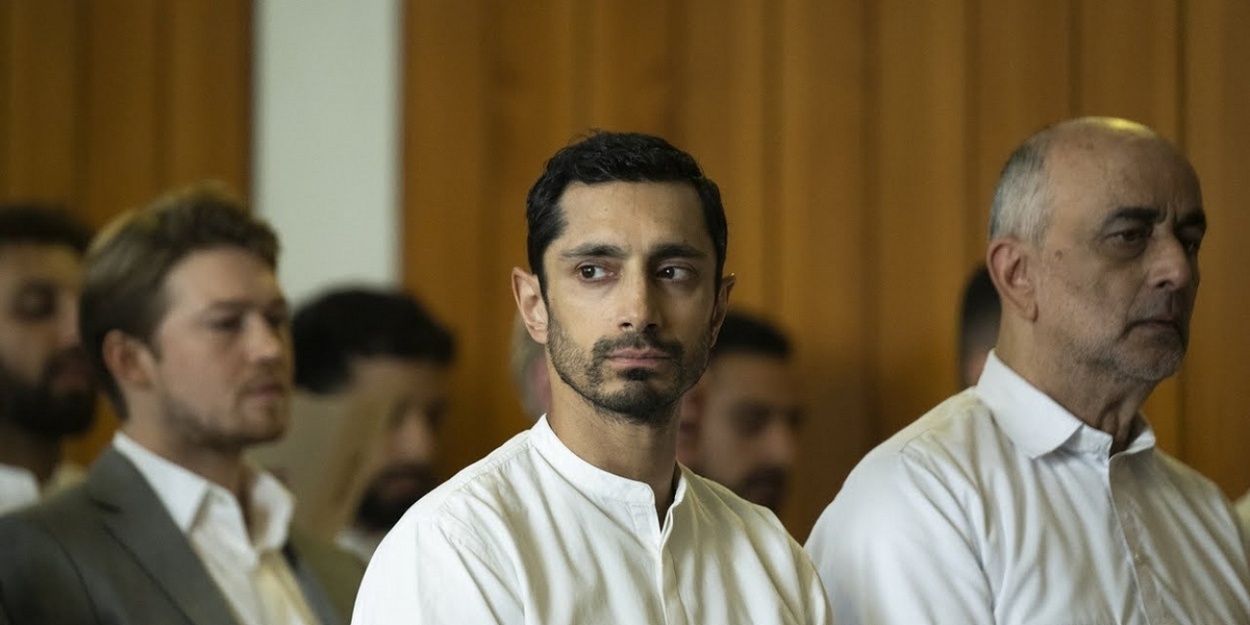
We leave Elsinore castle in 1500s Denmark for the Elsinore real estate corporation in London, todayish. Our prince Hamlet (Riz Ahmed) is distraught, having just buried his father (Avijit Dutt). Even club hopping with Laertes (Joe Alwyn) only makes the drug high turn despondent. One blurry night sends Hamlet into an Elsinore construction site, where his father’s ghost appears, telling the boy yada yada yada I didn’t die peacefully duh duh duh duh duh my brother Claudius (Art Malik) blah blah blah stole your mother Gertrude (Sheeba Chaddha) and my kingdom, something something, avenge me, bro.
So my writing sucks as you can see, but Michael Lesslie’s doesn’t. He and director Aneil Karia have a clear vision for what this version of Hamlet wants to be. The biggest change they go with is the story perspective. Shakespeare’s Hamlet has a more omniscient view, looking at multiple characters’ perspectives to paint a beautiful, dark picture of tragedy and power; the Karia/Lesslie update is more insular, determined to plant us inside Hamlet’s mind. That seemingly small change fundamentally changes how Hamlet plays out. Horatio isn’t necessary, as Hamlet’s laser vision of vengeance would only be undercut by Horatio’s voice of reason, having the audience instead question what we’re seeing as Hamlet succumbs to his torment. Ophelia sadly falls by the wayside too: blind revenge means no time for the love interest…until she reminds Hamlet brutally how shortsighted his belief is. Broadly speaking, each player in Hamlet is no longer a character: they’re projections of the prince, and what he chooses to see. Karia responds in kind by make the story feel like a fever dream reflecting Hamlet’s state of mind: look no further than the “to be or not to be” sequence. This is only helped by the cultural shift, the other big change, where anyone who’s attended an Indian wedding or party knows just how surreal those events are already. The movie’s breaking and recreating breathe ever fresh life into the story, more urgent and modern, while keeping the necessary parts of the play’s essence to keep the power and tragedy of the tale, widening Hamlet’s impact even further across the world.
Michael and Aneil are asking a LOT of Riz Ahmed here. It’s been an absolute joy watching him grow and evolve as an actor since his turn across from Jake Gyllenhaal in Nightcrawler over a decade ago. 2014 Riz Ahmed couldn’t have done this part, but 2026 Riz was ready for the challenge. He’s excellent as ever, fusing what makes him so alluring (inner turmoil and outward charisma, with shapeshifting) with this Hamlet character. Even if you struggle keeping up with the Shakespeare medieval dialogue, Ahmed’s acting conveys what you’re supposed to feel so well you can take a minute to catch up. Of the warped versions of the rest of the characters through Hamlet’s lens, Art Malik and Joe Alwyn supportively go blank slate for the most part, letting us project onto them what the story suggests, but having us question it just a little bit as we catch a glimpse of a crazed Hamlet looking on. Timothy Spall has the most fun, transforming Polonius into a cackling sycophant of Claudius, that Hamlet rolls his eyes at.
This is how to make a Hamlet adaptation your own. It walks the fine line of honoring the original while also distinguishing itself from it so both parties come out looking good. And when it comes to Timothy Spall and Art Malik, once a rat, always a rat, and never trust Lord Belasco, for the 9 people who watched that stupid 90s family nonsense and loved it like I did.