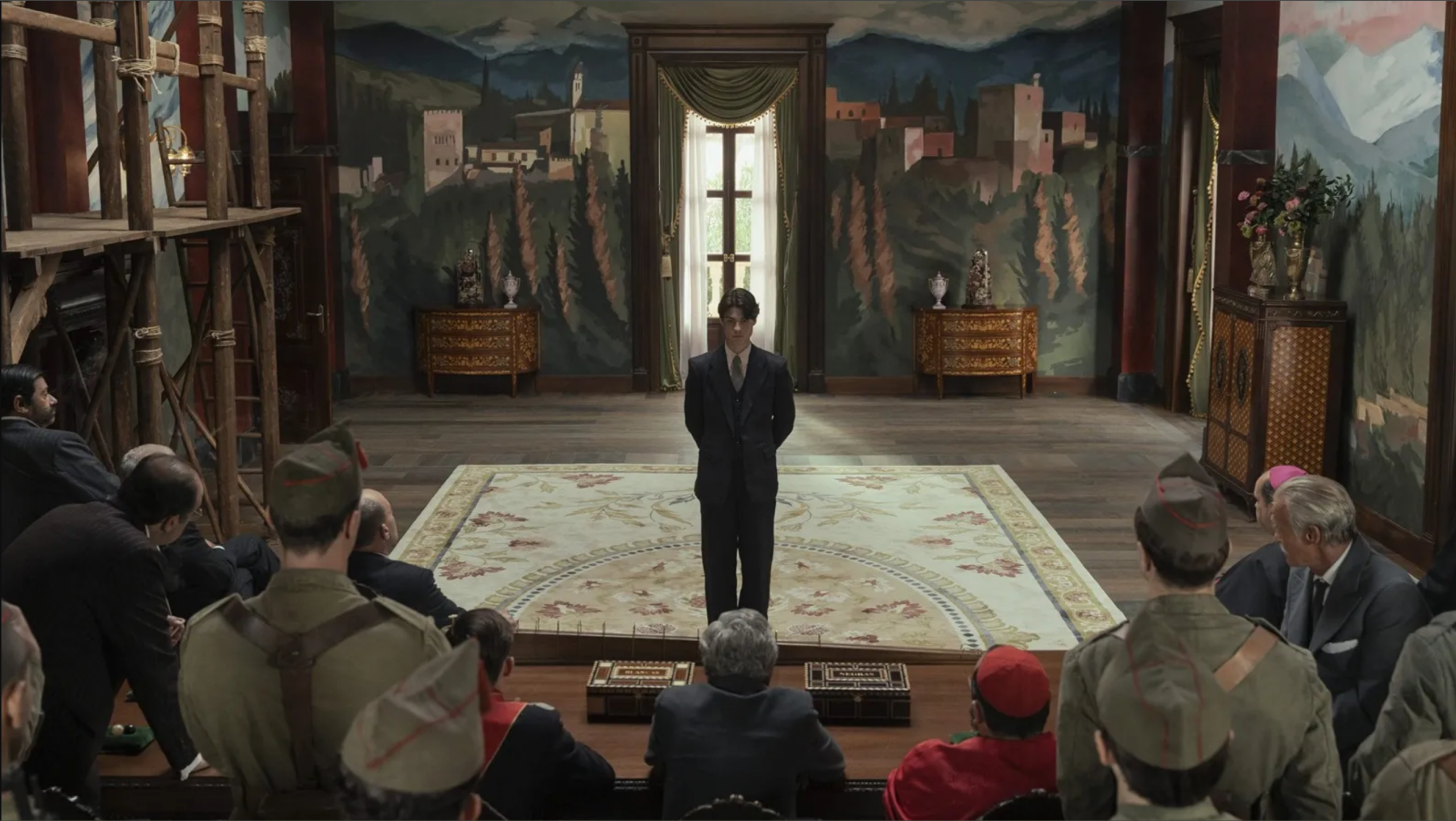

Social tolerance of the LGBTQIA community is only a recent global construct, something like the mid 1900s when being found out to be gay or a lesbian or something else wasn’t a literal or figurative death sentence. As such, in countries like Spain, people interested in any sort of “alternative lifestyle” history have to try REALLY hard to find or even infer certified moments where kindred spirits were alive and heroically representing their true selves. La Bola Negra is the beautiful poetic representation of that idea, and all the love and importance it carries today, and hopefully forevermore into the future.
This film is three tales rolled into one. One in 1937 is about a Sebastian (Guitarricadelafuente), a trumpet player recruited into the Nationalist army, forced to guard/control Republican POW Rafael Rodríguez Rapún (Miguel Bernardeau) during the Spanish Civil War. Another, earlier, in 1932 is about Carlos (Milo Quifes), an eager young man from a wealthy family desperately trying to join a social club. The third is 80 years later in 2017, where former playwright Madrid resident Alberto (Carlos Gonzalez) receives a piece of his dead grandfather’s will, and goes to the more rural Cantabaria to retrieve it.
At least 13 countries today punish homosexuality by death. Even in more tolerant countries like the US or Thailand there are plenty of areas where LGBTQIA behavior makes you a social pariah at best, making life a living hell for those poor individuals who cannot help who they are. Places like that wish that gay people didn’t exist; La Bola Negra is a powerful rebuke to that sentiment. The directors Javiers (Javier Ambrossi and Javier Calvo) brilliantly weave the three stories into this one larger narrative about the power of art and storytelling itself to keep people alive. Eventually, the present become the past, the future become the present, and a new future arrives. Carlos’s plight is a tragic endeavor as you might expect the way I framed it. But that tragedy becomes history, where people like Sebastian learn of it, and try to learn to be better. Which leads to Alberto decades latter, absorbing these 1930s lessons with other lessons he’s learned into become the deeper smarter, more empathetic LGBTQIA person he wants to be. That connection eventually starts weaving in more and more people, which is why society has progressed as far as it has today and continues to progress in the future, hopefully.
As a movie, La Bola Negra hinges on that 1937 tale, being the connecting one between past and future. That’s a HEAVY charge to put on musician and first time actor Guitarricadelafuente. And yet, he rises to the occasion. You feel every bit of the suppression any gay friend of yours explains all too well to you, as Sebastian has to buy who he is or face real death. There’s torment the minute the Civil War starts, save two big moments. One is his responsibility of Rafael Rodríguez Rapún (Miguel Berndareau is great when he’s not sleeping), which awakens Sebastian’s dormant true self slowly but heartwarmingly, as those feelings cannot be buried in the same way again. The other is the film’s big highlight, when traveling morale boosting performer Nené Romero (Penelope Cruz) plays for the Nationalists. To see Sebastian’s awakening opens our own hearts, as he comes alive thanks to his queer Fairy Godmother. The filmmakers and characters from the 1932 and 2017 sequences also back up their star’s stellar work with excellent craft and care. I particularly loved the sets from the 1932 story, and the prickly hot blooded dynamic between Alberto and his mother Teresa (Lola Duenas).
La Bola Negra is great enough that it is destined to be a part of the story its trying to tell. No wonder Glenn Close even wanted to get in on the action too. I don’t know if I had Spanish LGBTQIA historian on Close’s job list for her characters, but as this movie reminded me, no one should ever be put in a box. Damn it, i should have said no one will be ignored, stupid!