
This is the type of movie feedback loop I can get behind. Akira Kurosawa was so inspired by John Wayne’s westerns he patterned most of his best samurai films after 1930s Hollywood. From there, Steven Spielberg, Sergio Leone, and George Lucas were so inspired by Kurosawa’s masterpiece, they then took what he was doing to up the ante in American Cinema. It’s been 20 years since The Ring and The Grudge ushered in the J-Horror era, and now Dave Boyle taps into 80s American Horror Lore for Never After Dark, hopefully jump starting a new era of Japanese horror cinema that restarts the global movie cycle again, in the best way.
Two sisters, Airi (Moeka Hoshi) and Miku (Kurumi Inagaki) arrive at an old, abandoned hotel property. The current owner Gunji (Kento Kaku) summoned them through urging from his mother Teiko (Tae Kimura), who’s convinced she saw a ghost while making tea. Turns out Airi and Miku are mediums, and can help purge spirits from their tormented state. Judging by the reactions of Miku though, I don’t think Airi and her sis will have an easy night’s stay in Japanese Overlook Hotel.
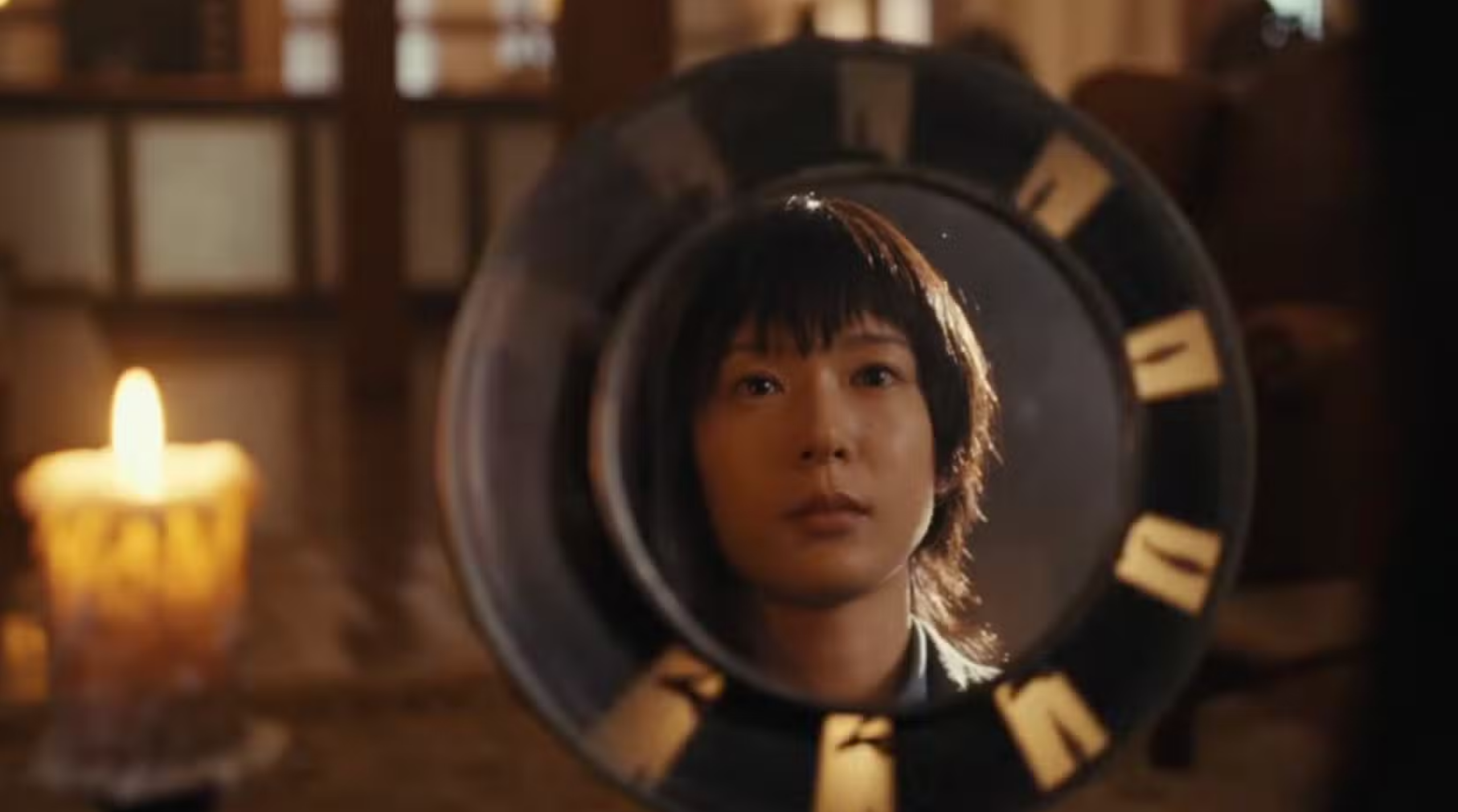
For years now, American Horror films make the mistake that CGI will always make the movie more scary. It can sometimes, but the success rate is much lower than using good old practical effects. There’s a great moment in Never After Dark when one scene shifts locations within the scene, and Boyle just uses some color gradient shading that immediately drives the point home and effectively wows the audience into paying attention. There’s also grittier components to this tale as you might expect, as every pain is accompanied by incredible sound design and positively creepy props that make Never After Dark more intimate and terrifying. It’s amazing how something as simple as scratching to open a wood panel could set your teeth on edge so easily and effectively. Couple that with the wonderfully strange hotel layout, and accompanying creepy grounds, and you’ve set the stage for the film to fly, provided it’s script is strong enough.
Spoiler: it is strong enough, and then some. Within the first 5 minutes, we’re off kilter, as it becomes very clear Miku is not alive: she’s helping a traumatized Airi from the other side of “the veil.” Airi’s comfort with spirits like this has the audience immediately starting from scratch on what Never After Dark’s spook rules are going to be. Like The Conjuring, this saves the screenplay from having to justify constantly, as Airi would walk into the creepy flickering light room with the scratching, to see what the disfigured ghost is up to. Her malaise at her job relaxes us…but that’s also a nice red herring. Miku’s reactions and Airi’s near escapes paint a darker and darker picture of this malevolent force they’ve found themselves around, with the nosy proprietors not making things any easier with their presence. A couple twists push the logic up to the confusing line, flirting with it, but moving fast enough that we don’t have time to question as the title’s big rule might have to be broken, at this point scaring the bejesus out of Airi and us as a result.
The more things change, the more they stay the same. Just not in the US. Never After Dark has a blast with a tried and true American horror formula, making it their own with Dave Boyle being the locked American evil twin in one of the 28 Days Later attics Danny never talked about. Ok, they’re not related, but how crazy would it have been if they were?