
Kiyoshi Kurosawa must have been feeling his last namesake calling. He’s not related to Akira Kurosawa, but he’s got similar gifts as the legendary director. I guess it was only a matter of time before he made a samurai film. But Kiyoshi’s The Samurai and the Prisoner would make Akira proud, taking a legendary Japanese storytelling style and making the film in Kiyoshi’s image. And like Akira, maybe a little Rian Johnson Western influence sprinkled in.
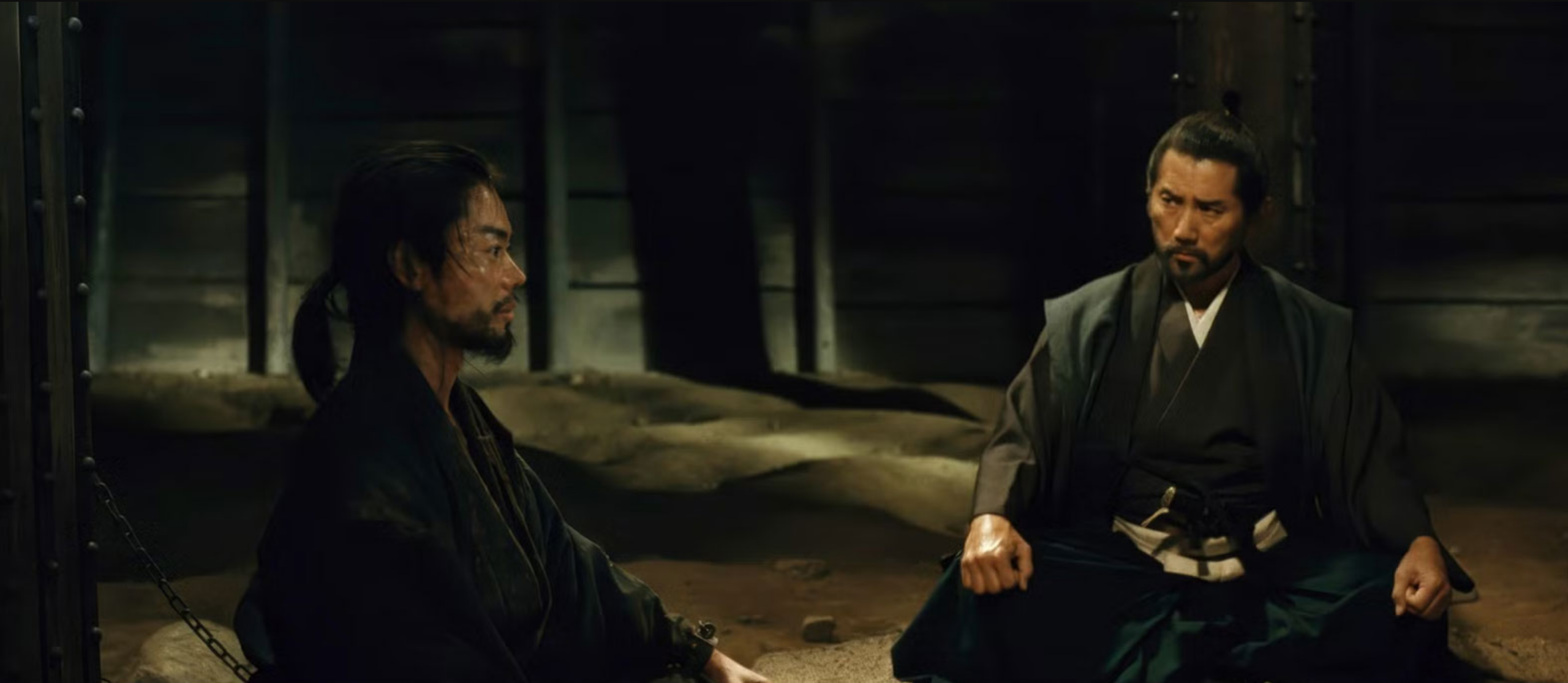
It’s 1578 in the Settsu Province. Samurai Araki Murashige (Masahiro Motoki) is ruling over Arioka Castle, holding off warlord Oda Nobunaga’s (Bando Shingo) forces as best he can. To forge a peace, Nobunaga sends a samurai Araki knows, Kuroda Kanbei (Masaki Suda). Instead of negotiating, Murashige takes Kanbei as his prisoner, violating nobility and decorum of the age…but for Arioka Castle’s strategic advantage.
Those expecting a lot of swordplay and battles will find one here and there. But Kiyoshi Kurosawa is much smarter than just recreating versions of older films. Instead, he takes a new route, by focusing on the brains instead of the brawn. The Samurai and The Prisoner is basically 4 30 minute TV Murder She Wrote episodes stitched together with the bones of a samurai fable. What Kurosawa brings to the table is modern sensibility; his attempts to decouple the myth of the samurai with the actual mastery of the samurai. This is not some clear path Araki Murashige is on; each new fable reveals a possible issue with his leadership of Arioka Castle, and how he has to change and adapt to find the best resolution to each problem. That’s rich, relatively untrodden territory in samurai movie history, giving Kiyoshi Kurosawa a blank, and exciting, canvas to paint on. This means even if the mysteries aren’t all that engaging (a couple are pretty easy to solve, if not most of them), the audience should be more locked in on Masahiro Motoki, Masaki Suda, and their evolving relationship with each other and the power dynamics inside Settsu Province. By the end, Kiyoshi Kurosawa’s Arakilock (a BAD Matlock pun) 4 TV episodes will stay and stew with you, because of the route the director makes his samurai take.
But if you came for samurai fun, that’s in here too. The beginning is stupendous to look at, beautifully capturing 1570s Japan in all its gorgeous period attire, and Minka houses wonderfully constructed to be taken advantage of by the plot. Inside each of those houses are beautiful props and trinkets to help us immerse quickly and lock in, including maybe the most important tea pot in human history. Each fable gives us a bit of samurai lore we’d expect…with a little something new. The big one is in the 2nd mystery, which opens with an incredibly laid out action sequence that came closest to resembling Akira Kurosawa’s samurai classics. But even for that battle, and the swordfights, Kiyoshi Kurosawa puts a fun spin on them, like say, a more down and dirty one on one battle, fitting the writer’s grounded take. I mean, if your life was on the line, you’d probably do anything you wanted to survive right? The speechifying is on point from everyone, using poems and riddles, and thematic declarations aplenty fitting the time. But the best monologue is delivered by Murashige’s wife, Chiyoho (Yuriko Yoshitaka), wonderfully heavy lifting this movie to its conclusion with a little something new and exciting the story needed. The biggest samurai staple of the genre I won’t spoil, but Kurosawa nails exactly what we all wanted, just at a point in the story we weren’t expecting it.
So congrats to you Kiyoshi Kurosawa. You live up to your namesake Akira, and Kenji Mizoguchi, the best jidaigeki moviemakers, with your own take on the genre. Now it’s my turn to repay your awesomeness by seeing your best films ASAP. Cure and Pulse, for the record y’all.