
For obvious reasons, there wasn’t probably a lot of appetite to make commercial international films about Germans returning to Germany after WWII ended. I like everyone else wondered why initially myself for Fatherland. But whenever “directed by Pawel Pawlikowski” comes up after, the worries fade away, knowing one of our great movie artists is going to give the story the necessary heft and thought. And Sandra Huller.
I had no idea, but Germany has their own Thomas Mann (Hanns Zischler), a legendary writer himself who, as you might expect, was forced to vacate his home and immigrate to the United States. But WWII is over now, and Frankfurt mayer Walter Kolb (Waldemar Kobus) and Soviet Leader of East Germany Sergei Tiulpanov (Daniel Wagner) convince Mann to come back with his daughter Erika (Sandra Huller) and go on a publicity tour across the split country to ask artists to return and celebrate Thomas’s works.
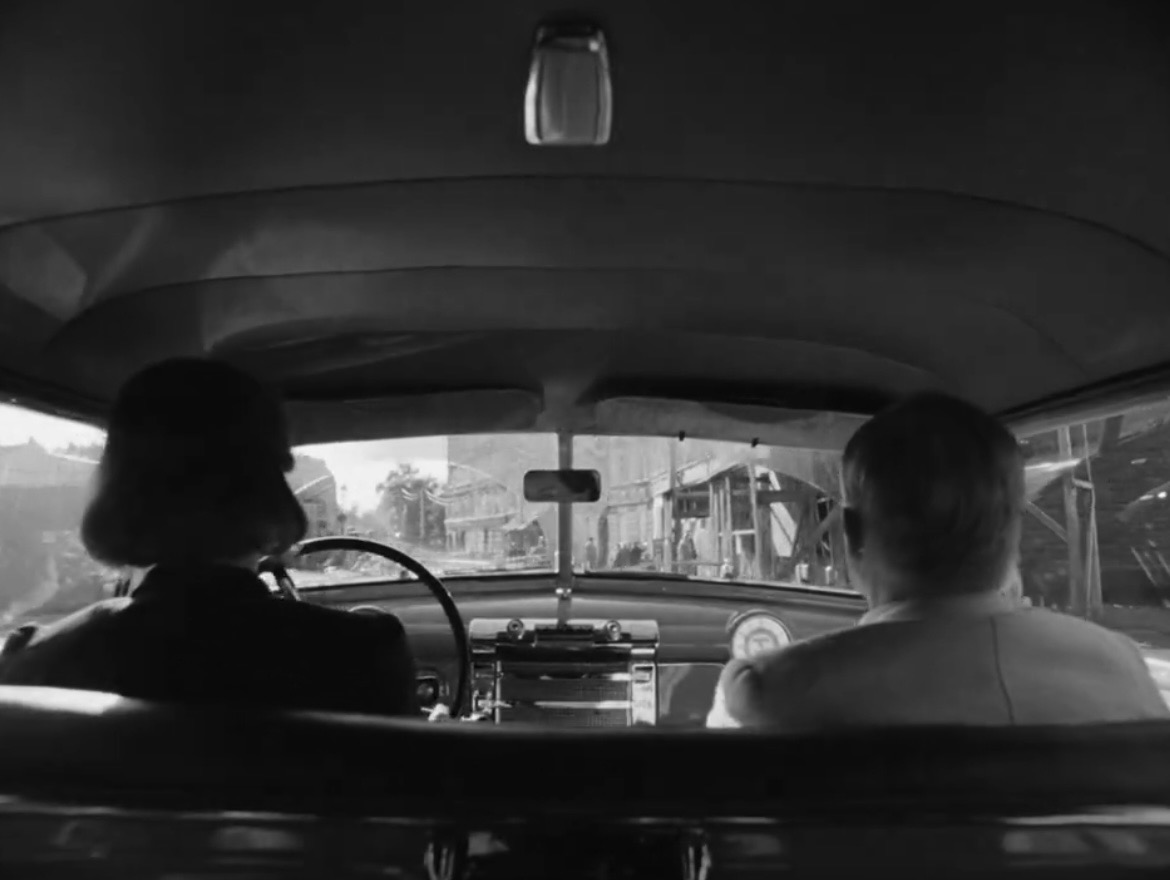
Pawlikowski must have gotten bored during the pandemic and watched Ingmar Bergman’s Wild Strawberries a few times and decided: I wanna try that! Pawlikowski’s isn’t the now masterpiece Bergman’s is, but it’s still very much him. There’s the black and white cinematography, with transcendently beautiful tracking shots through war torn post WWII Germany in a car, eliciting both feelings of inspiration and desolation, very much the point of Fatherland. I always forget Pawlikowski’s bag of scene magic tricks: putting scenes of kinetic energy (in this case a giant party) with wide shots so we can see everything. And all we can really see is Sandra Huller or Hanns Zischler, still, immersed in some real, higher thought than the partiers all around her. Or the big shot of floors of a house or a room like a stage play, making his story bigger and slowly letting us take it all in before he does anything with his characters. He adds a new one here from a bag of old Hitchcock tricks; a character is giving a speech, looking out at the audience: they see all faces glued on them, filled with rapture. And yet, the one face they truly hope is the same is looking somewhere else, devastating the speaker. All of this is in service of Pawlikowski’s larger theme about the possibility of returning to an old life, and if that is even possible in any way.
While the screen is big, Pawlikowski’s emotional grandeur comes in the deeply intimate. The focus is the family at the center: Thomas, Erika, and their son/brother Klaus (August Diehl). This is a very German family: very smart, but a little too chilly and coldly logical to connect in a more human way with each other. That distance permeates the journey, as all these fawning participants in events should be making the Mann’s more happy, but it actually does the opposite. Sandra Huller, Hanns Zischler, and August Diehl are all excellent, capturing that yearning desire for closeness without the means to ask for it. The Germany of it all leads to a more sedate viewing experience than Pawlikowski’s better movies, but when something grand needs to happen the great actors and director get us where they want to take us, especially the beautiful ending.
I don’t know how many more WWII movies Pawel Pawlikowski can keep making, but I’m happy to let him try. He’s clearly got something there he wants to continue to explore and get off his chest. And I selfishly like the deep passion he puts into all of his projects. Keep making me sad Pawel. As I get older, I understand that sadness a little better each time, and truly adore the art you put into those feelings.