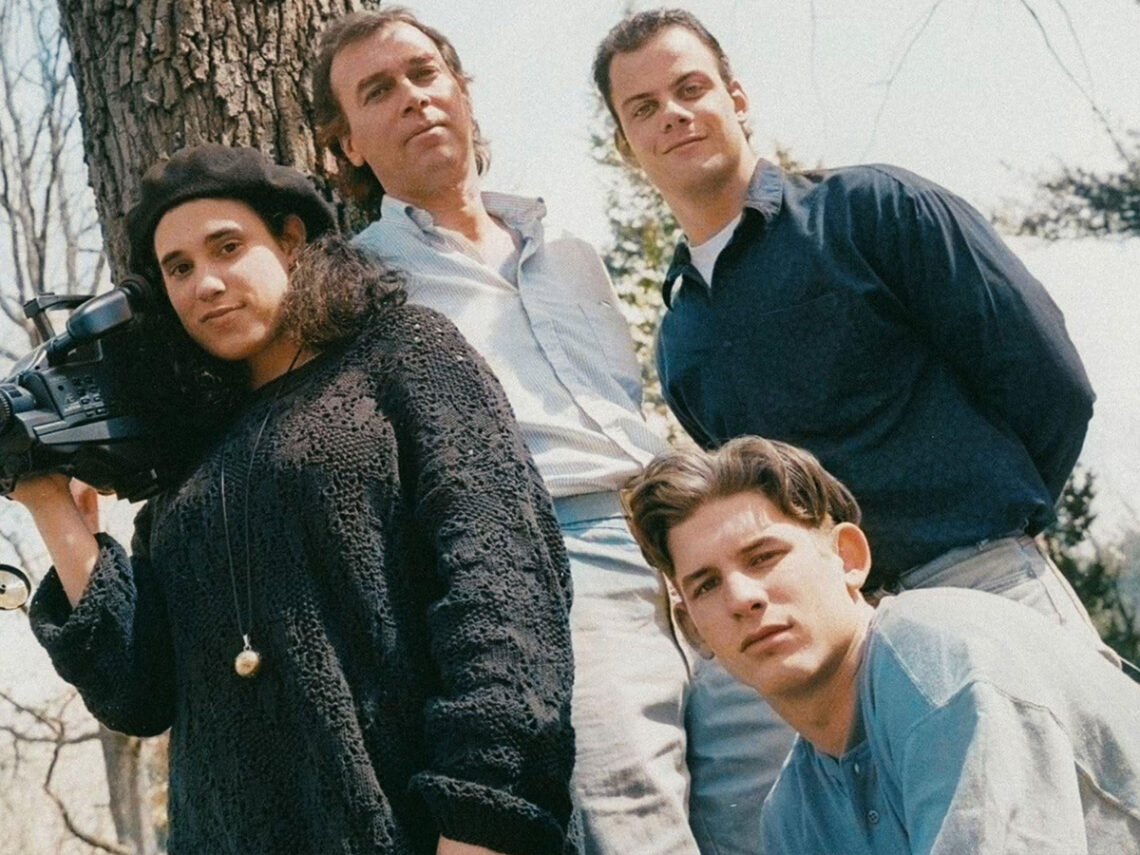

And so completes Jesse Moss and Amanda McBaine’s “high school documenatry as a microcosm of America” trilogy. I’m still workshopping the name. But after clearly being permabanned from any Boys or Girls State activities anymore, Moss and McBaine go back in time in high school for Teenage Wasteland, to show us the more things change, the more they stay the same. But, with proper guidance, also the kids are gonna be alright.
We’re in 1991 Middletown New York. An eccentric high school English teacher named Fred Isseks creates a senior elective called “Digital English.” Students like Jeffrey Dutemple, Michael Regan, Rachel Raimist, and David Birmingham end up there via choice or risk of suspension for ditching. Either way, Isseks tourns them into mini journalists, starting with investigating the landfill near where they all live, and why despite all the city councilmen’s statements, hordes of toxic waste keep ending up there with no real consequences.
I have no idea how Moss and McBaine find these stories, but props to them for brining them to light. They show with Teenage Wasteland how a big story can start pretty small. Mr. Isseks class is mostly filled with directionless teens that are eager for some purpose. Through their interviews, it’s clear that this landfill journalism study is the push they needed. With free reign to shoot and edit their footage the way they want, Dutemple, Regan, Raimist, and Birmingham among others blossom into real people before our eyes. We see their righteous anger at all the injustices going on here, their first real lessons in how power corrupts, and their first time questioning adults who were not ready for their well thought out interviews. You can feel the enthusiasm and fervor of each of the now adults in Mr. Isseks class, and just how formative and life changing this weird elective was to their lives.
Also helping is what they uncover. At about the halfway point, Moss and McBaine introduce the “Deep Throat” like whistleblower, “Mr. B.” From there, this story grows in ways the students could never imagine. The doc has to leave the school to show the sheer magnitude of what Middletown High actually uncovered. This is the dark side of the kids’s project: when they break through one system of corruption, it reveals a deeper, more insipid, and dangerous layer as the power increases. I couldn’t believe how far this tale went, and who was behind it all. For about 30 minutes Teenage Wasteland becomes a political thriller, with Freedom of Information Requests revealing a smoking gun in their investigation they’d never thought they’d find, and the consequences of this digging, including posturing too crazy to believe when we started in that AV public access room. The doc gets a little too excited and unfocused at this info, but that probably paralleled how the high school kids felt as they tried to piece together themselves just what exactly was the fully story of their local landfill.
Teenage Wasteland ends in a similar place as Boys State and Girls State. Jesse Moss and Amanda McBaine show us a story that has ultimately, a disappointed and dissatisfying conclusion because we don’t stop the levers of power the way we want them to. But yet, the ultimate feeling is joy, because of the people this story created and the purity at the heart of the pursuit. Jeffrey Dutemple, Michael Regan, Rachel Raimist, and David Birmingham showcase the power of great education and good teachers, taking moldable kids and giving them a noble, moral pursuit at the perfect right time in their lives to receive that lesson. Big thank you to the Fred Isseks of the world, taking that challenge seriously, and making civic society better for it.