
Even though I lament not getting Once Upon a Time in Harlem when they filmed it in the 1970s, at least we got it at all. David Greaves finishes his fathers astute documentary work, giving us a wonderful artifact of American History, shown in high schools during spring semester when history teachers have given up and the juniors and seniors prep for their ditch day. Hopefully a few days watching this will make some of them reconsider.
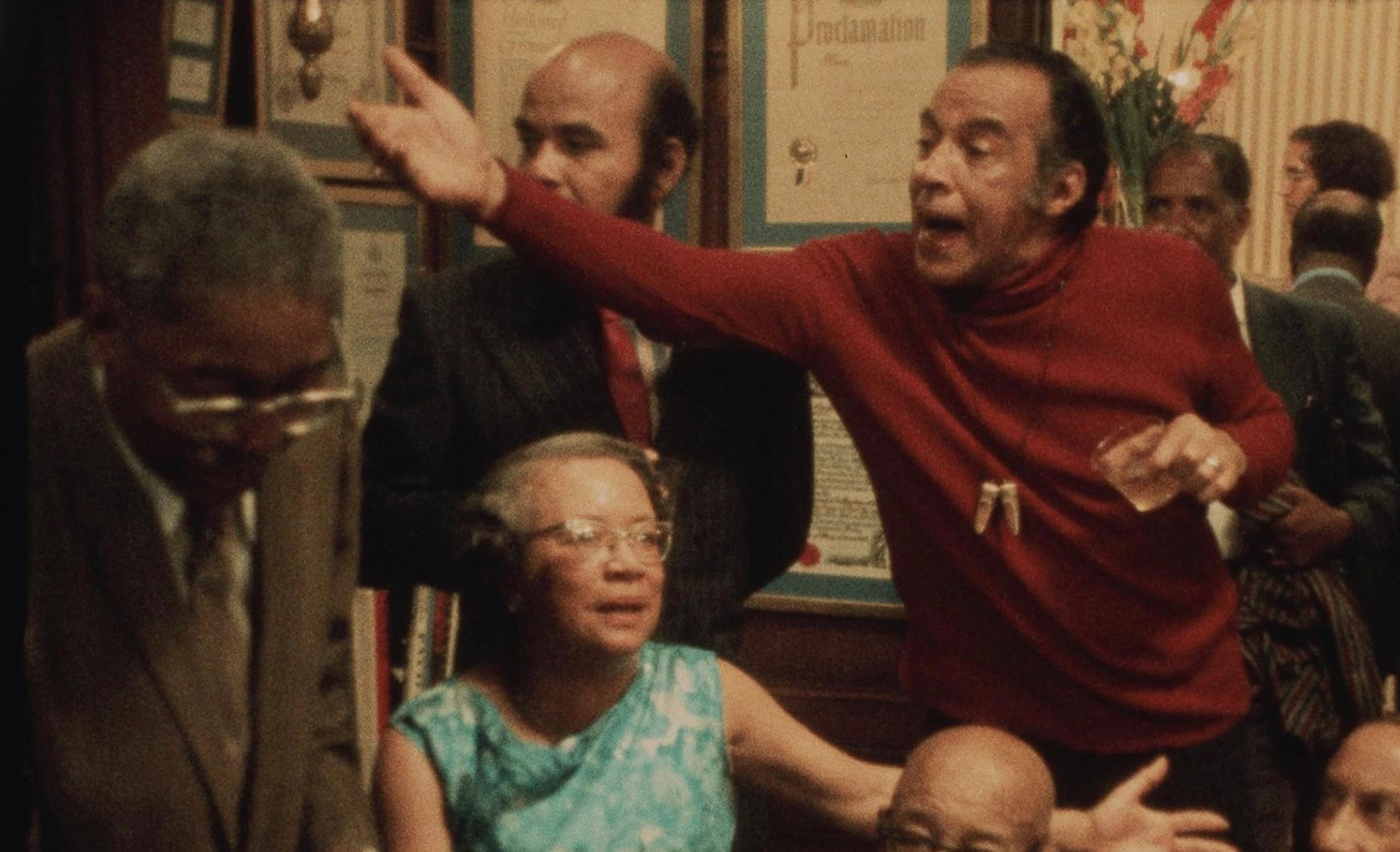
In 1972, documentarian William Greaves convinced Duke Ellington to lend his apartment for a cocktail party. Attending were surviving members of Harlem’s 1920’s Renaissance, one of the most important cultural revolutions of the 20th Century. People like society editor Gerri Major, poet Frank Horne, artists Romare Bearden and Ernest Crichlow, actor Leigh Whipper, librarians Jean Blackwell Hutson and Regina Anderson, theatrical producer Irvin C. Miller, historians Nathan Huggins and John Henrik Clarke, activist Richard B. Moore, journalist Ted Poston, and writer George Schuyler, and many others reminisced about their artistic rise, debated hot button topics that divided them, and waxed poetically about fallen peers like Marcus Garvey, Langston Hughes, Zora Neale Hurston, Claude McKay, Paul Robeson, and Augusta Savage.
Like Summer of Soul a few years ago, Once Upon a Time in Harlem makes you feel like you’re witnessing living, breathing history. Obviously David Greaves deserves a ton of credit for resurrecting the footage from some basement somewhere and giving us this treasure. But maybe even moreso props to the editors Lynn True and Anne de Mare for making a movie about erudite debates so watchable. Other than I’m guessing Duke Ellington, Marcus Garvey, and Langston Hughes, not as many figures in this apartment are as remembered as they should be. While each of them is speaking, True and de Mare find photos of their younger selves, or at least play some of the art they crafted, whether it be poems or paintings, or a hit musical number. Each of the many people get shout outs, including the tragic ones who didn’t make it to 1972. Hell even the librarians Hutson and Anderson get their photo sequences and even better, shout outs from everyone at the party for their pivotal role encouraging cultural and artistic education. William Greaves’s direction makes you feel like a fly on the wall at that party, drink in hand, listening to the great minds of the 20s pontificate about something with a new collection of people every 5 minutes or so.
I always loved James Baldwin because there’s all this footage of him on talk shows debating the intellectuals of the time on anything and everything, especially when it comes to race in the United States. Once Upon a Time in Harlem’s gift is it gives us 20 or so Baldwins, with their own thoughts and opinions, ready and willing to talk about anything they did during their cultural apex. Because camera awareness hasn’t hit this generation, all the conversations are respectful, but wonderfully honest. I had often wondered how the Back to Africa movement was felt in the US African American community, and this movie gives us fascinating discussion with people on both sides of the debate. One of the most powerful sections of the movie is the conflict over the word “Negro.” You can sense the generational divide between elder statesmen like Leigh Whipper and younger kids like Jean Blackwell Hutson feel the negative effects of the Ku Klux Klan taking that word and want to ban it. But while these “heated” moments are filled with power, some of the best parts of William Greaves’s documentary are all of these people in real time putting together what they think will be the historical context of their lives. Leigh Whipper is REVERED amongst this cohort, being the first to proudly act in minstrel shows and bring that art from the South into Harlem. Journalists praise the artists, who in turn praise the librarians for their support, who then historically remind others of the deceased so they will not be forgotten. Like a great doc does, I went down a bit of a rabbit hole learning about Zora Neale Hurston and Augusta Savage, because of how much of an impression they left on the partygoers.
Dream Deferred is one of my favorite poems of all time. I knew Langston Hughes was special, but watching Once Upon a Time in Harlem, I understand much more of the context of his life, and more importantly, the other figures that helped make poems like that precious historical documents that belong in the Smithsonian, or any and every important museum in the United States. Also, thanks Mr. Greaves for praising the librarians: I wouldn’t be writing reviews today were it not for my mother, who treasured the power of books and its ability to make you learn and grow as a person, and giddy with excitement over seeing this beautiful documentary.